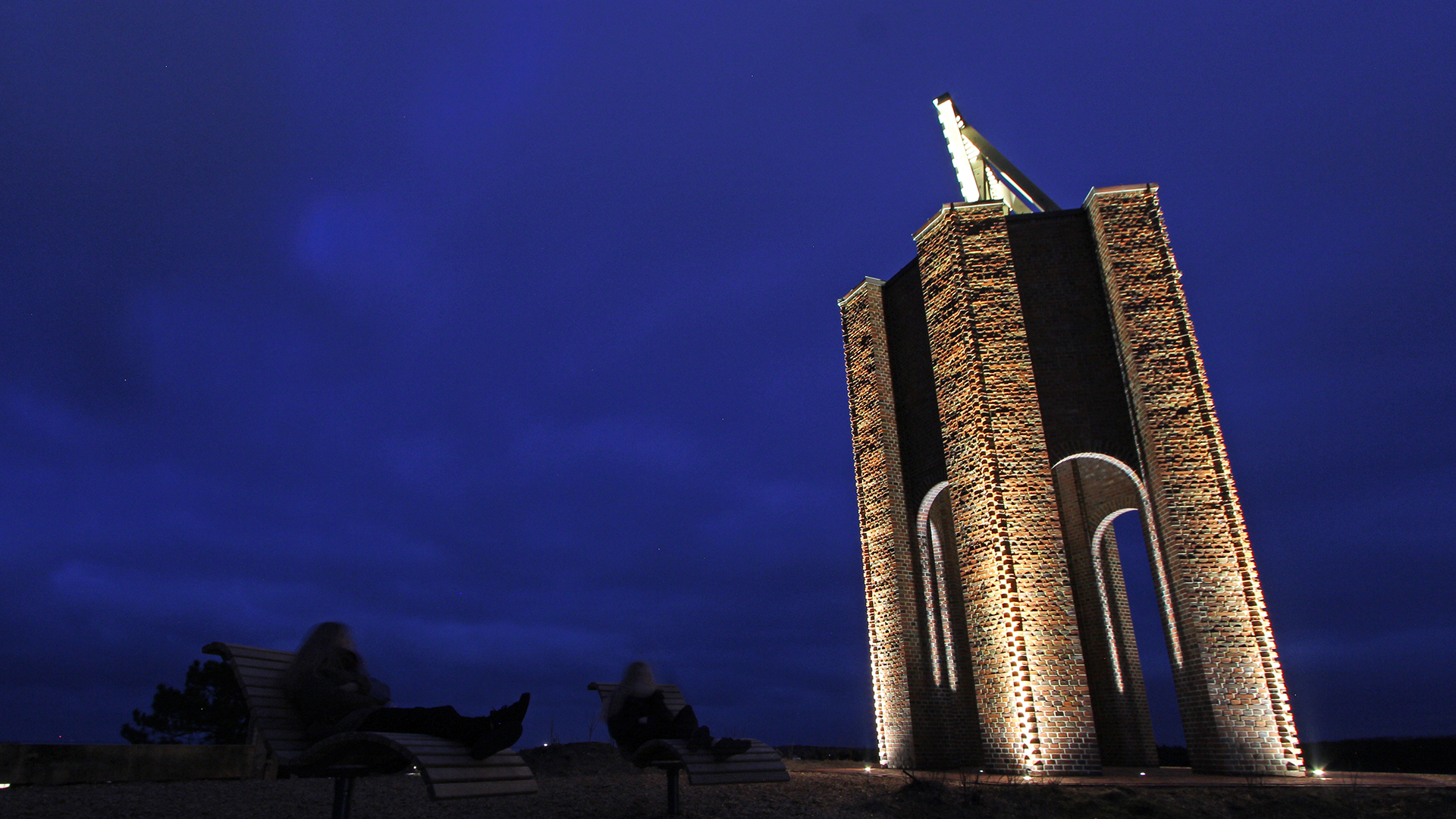
Cape Norderney, Germany
Effective presentation of a sea marker and landmark
The first thing that comes to mind when you hear "illuminated sea marker" is probably a red and white striped lighthouse. However, there are many other kinds of sea markers – and Cape Norderney is even the symbol on the coat of arms of the island in the East Frisian Wadden Sea. In the course of extensive reconstruction work, the landmark has been given dramatic night-time lighting.
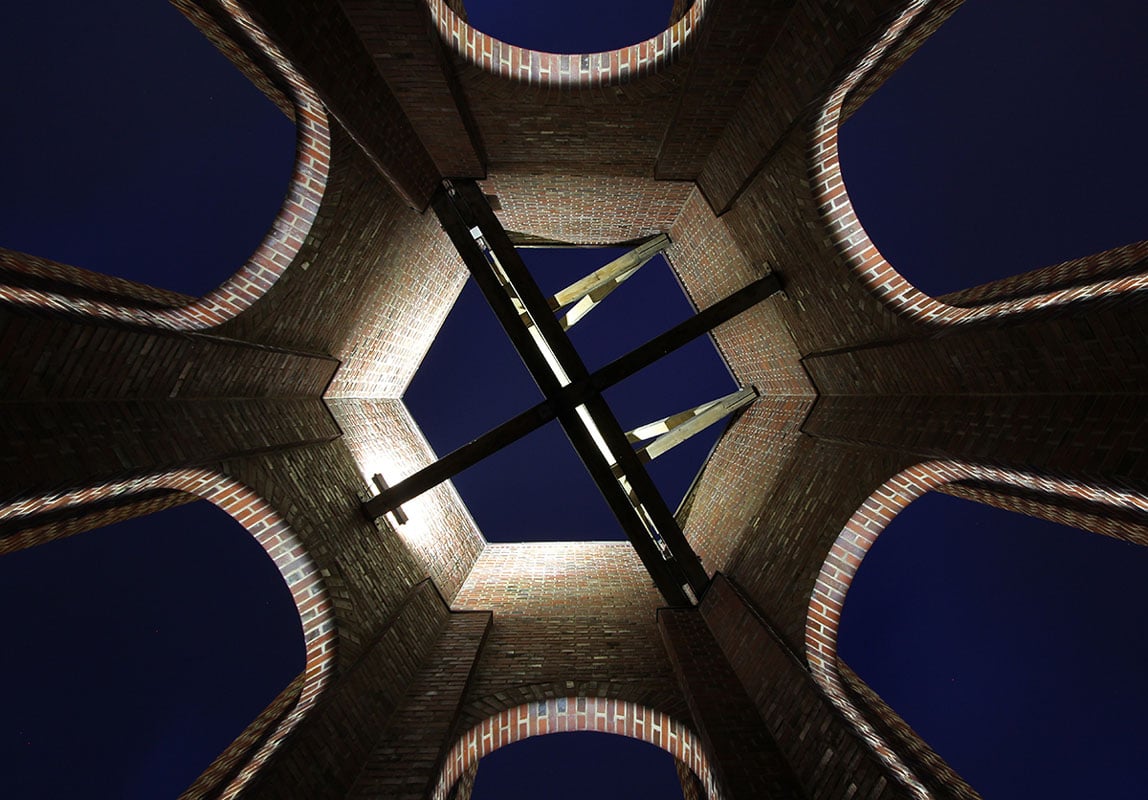
Cape Norderney is an approximately 12-metre-high beacon that was originally erected in 1848 at the request of Emden merchants, on the 15-metre-high beacon dune to improve safety for seafarers. The first beacon, which only consisted of a wooden framework, was replaced in 1871 by a hexagonal brick building. It has adorned Norderney's coat of arms since 1928 and it is a landmark of the popular East Frisian island. Today, its main role is serving as a historical monument and a tourist attraction; a "real" lighthouse, the island's only active sea light, has long since ensured maritime safety. This meant that lighting designer Oliver Christen did not have to consider any nautical requirements when he developed the lighting concept for the historic beacon as part of the reconstruction project, and he was able to focus his attention entirely on showcasing the architectural form.
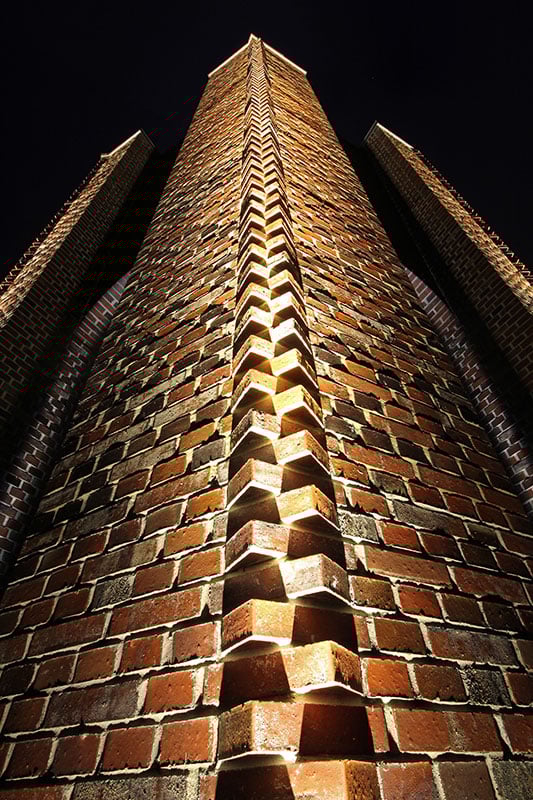
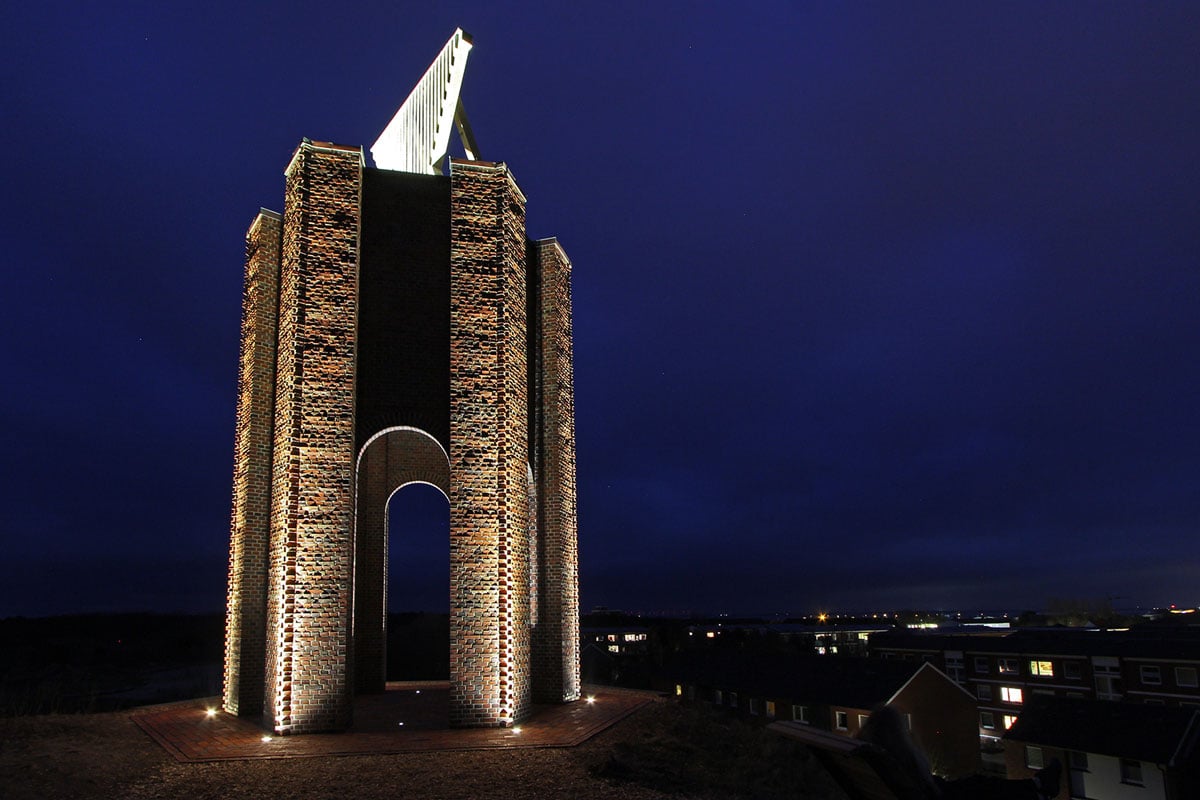
Oliver Christen used high-contrast lighting to emphasise the details of the striking building structure with its round archways and angular columns. The sea marker, a triangle of wooden slats standing on its tip, appears to float above the structure. After various tests, a lighting concept was chosen that accentuates the six wall columns with WE-EF ETC120-GB [EE] inground luminaires. The precisely aligned warm white light of the gimbal-mounted symmetric, very narrow beam optics emphasises the lively surface of the brickwork. The efficiency and precision of WE-EF LED lighting technology was a decisive factor in choosing the luminaires, as was the high quality of the housing. The inground luminaires boast 5CE superior corrosion protection technology, ensuring reliable, long-term operation – even in the harsh coastal climate.
Credits
Principal: Local authority of Norderney Light planning: OC-Lichtplanung, Oliver Christen, Diepholz Landscape architecture: Frank-Dieter Stucken, Bötersen Photos: OC-Lichtplanung
Loading related products...