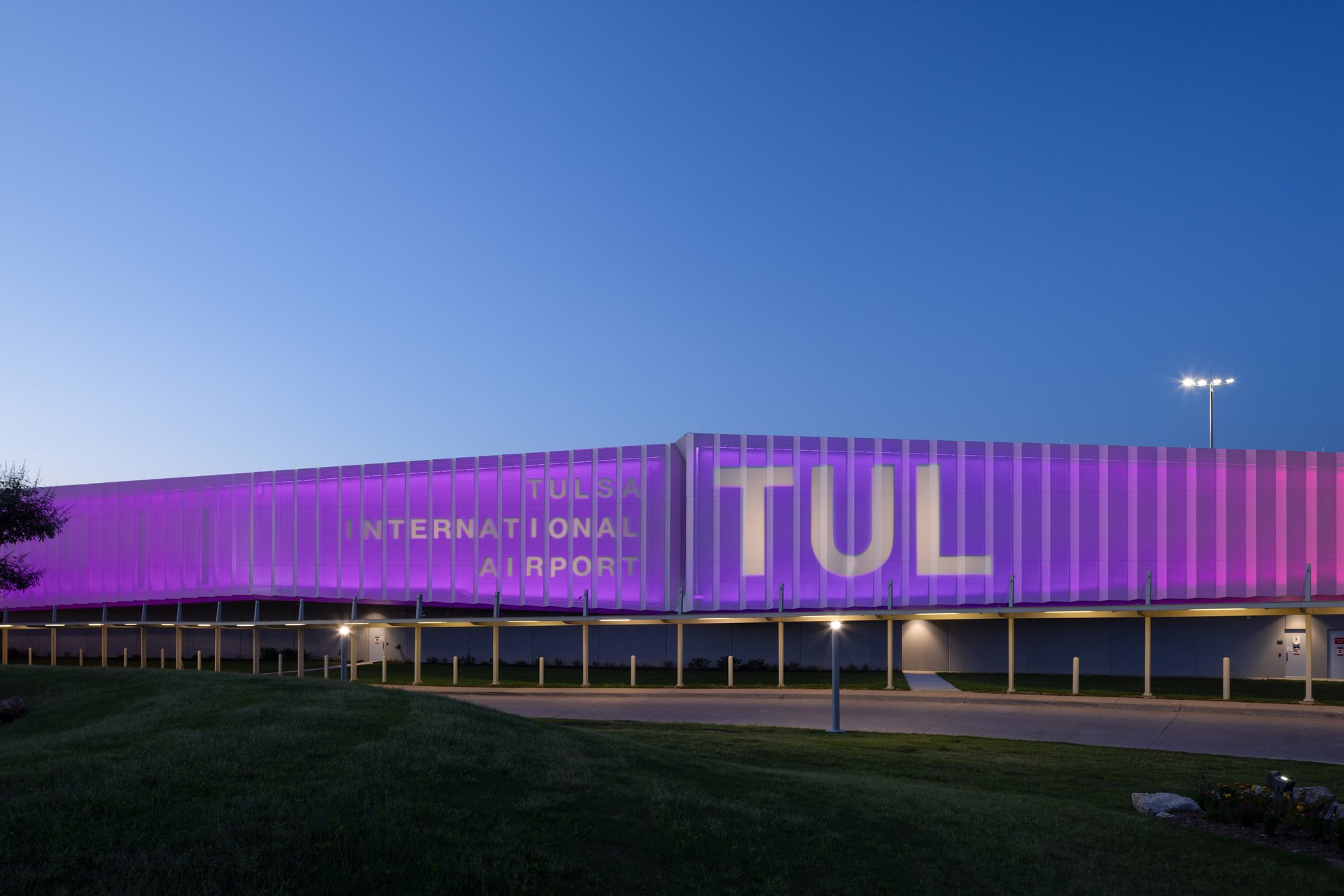
Tulsa International Airport
Celebrating International Travel with Dynamic Light
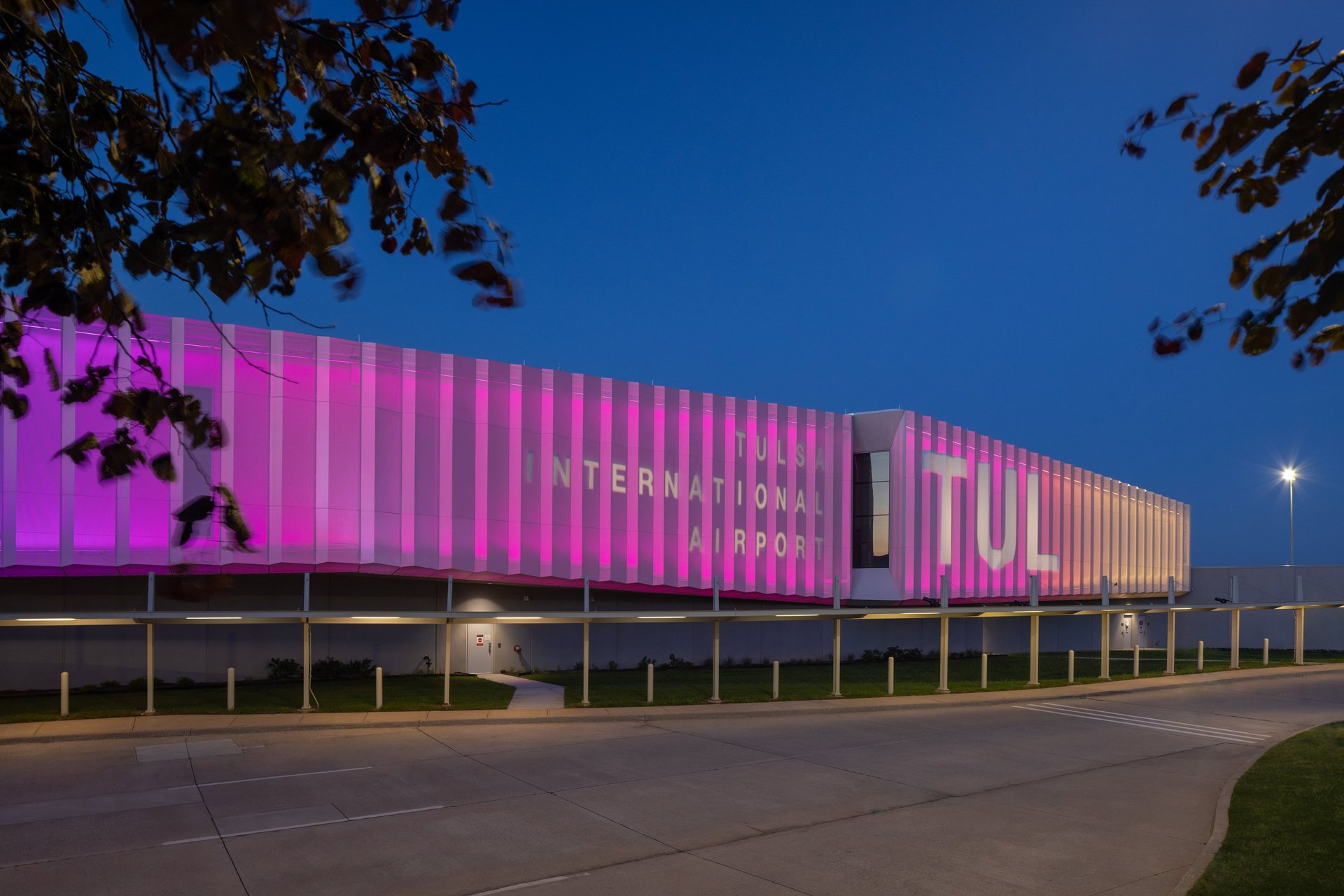
With the opening of its new International Customs Facility, Tulsa International Airport introduces nonstop international travel for the first time, marking a new chapter for the city. The façade becomes a visual anchor for this transformation, using light to welcome travelers and celebrate Tulsa as a destination. Designed by local architect, Narrate Design, along with lighting design by ARUP, the façade of the airport features a saw-toothed rainscreen, backlit by color-changing luminaires, larger-than-life “TUL” letters, for the Tulsa airport code, and the full name, “Tulsa International Airport,” illuminated by GOBO projectors. Visible from the surrounding roadway, the illuminated exterior acts as a guiding presence—connecting movement, place, and identity while reinforcing the airport’s role as a gateway to the city. “We had this beautiful façade, that needed more special attention,” said ARUP lighting designer, Kylie Forbes. “We launched into a discussion with the airport about what is bringing people to Tulsa. We wanted to celebrate air travel; celebrate bringing people to the city.”
A Smart Lighting Concept that Tells a Story with Color
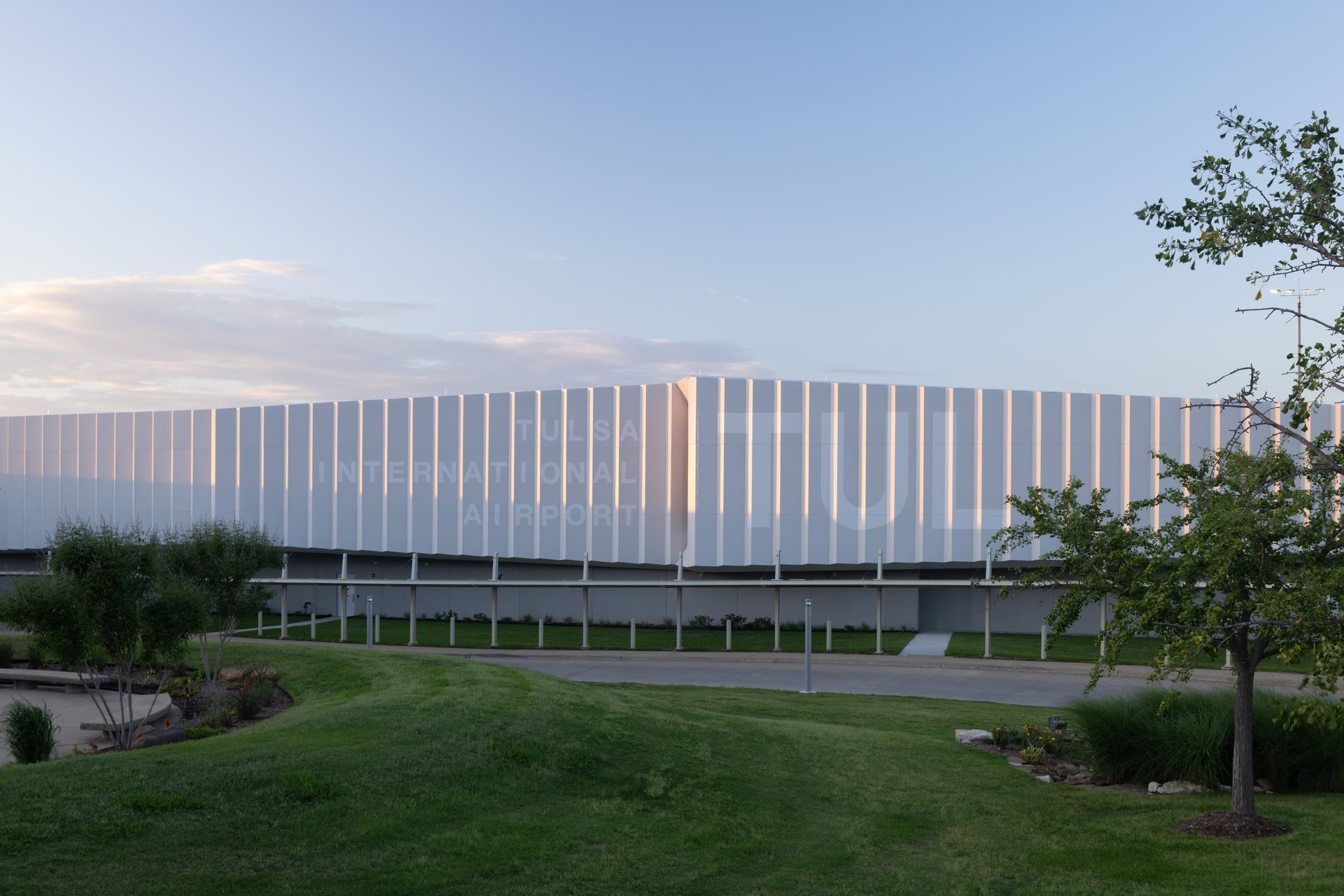
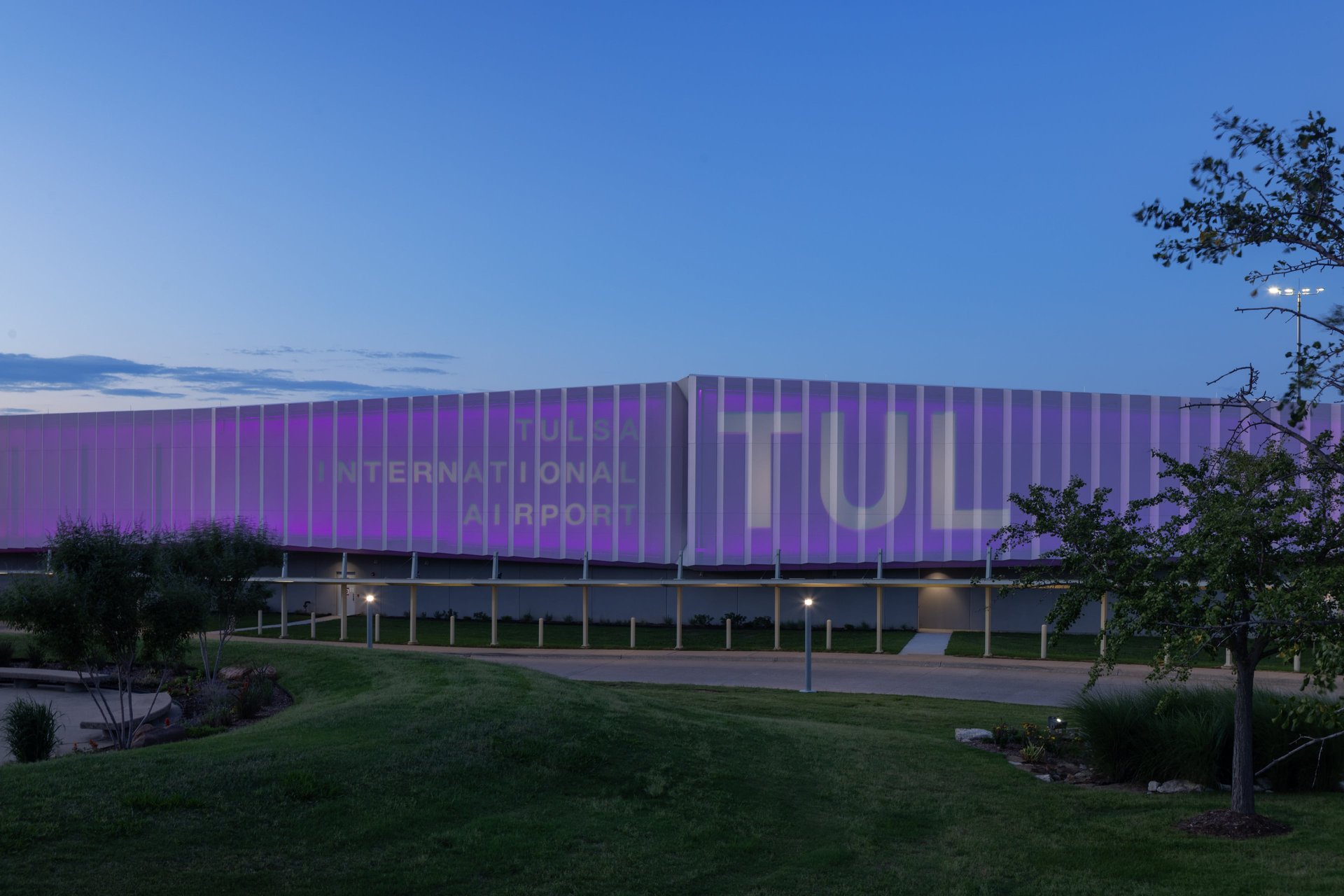
The lighting design transforms the rainscreen into a continuously shifting canvas of color and light. WE-EF’s ETV140 color-changing luminaires were selected to deliver a uniform, controlled wallwash, enhancing the building’s architectural rhythm while maintaining visual clarity. Through the design process, we developed a custom bracket allowing the ETVs—normally an inground luminaire—to be surface mounted. With prototype samples, the lighting design team tested out the positioning of the luminaires behind the rainscreen, determining that pointing the ETVs toward the wall both hid the power supply and created an even wallwash of light. The final design features 118 ETV140s arranged in two continuous rows at both the top and bottom of the façade, ensuring a smooth blending of light.
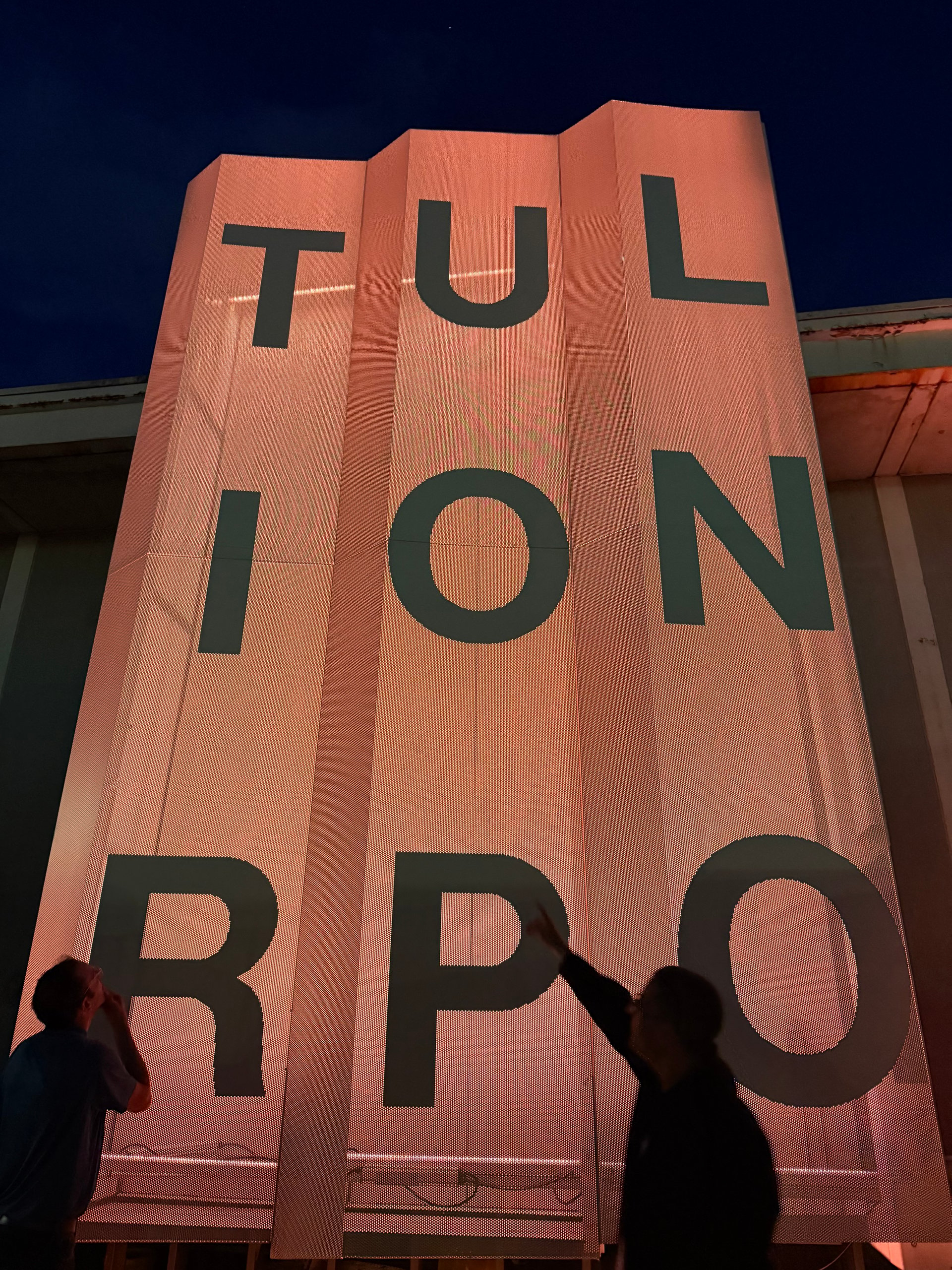
With ETVs mounted on the top and bottom of the facade, it creates a seamless color.
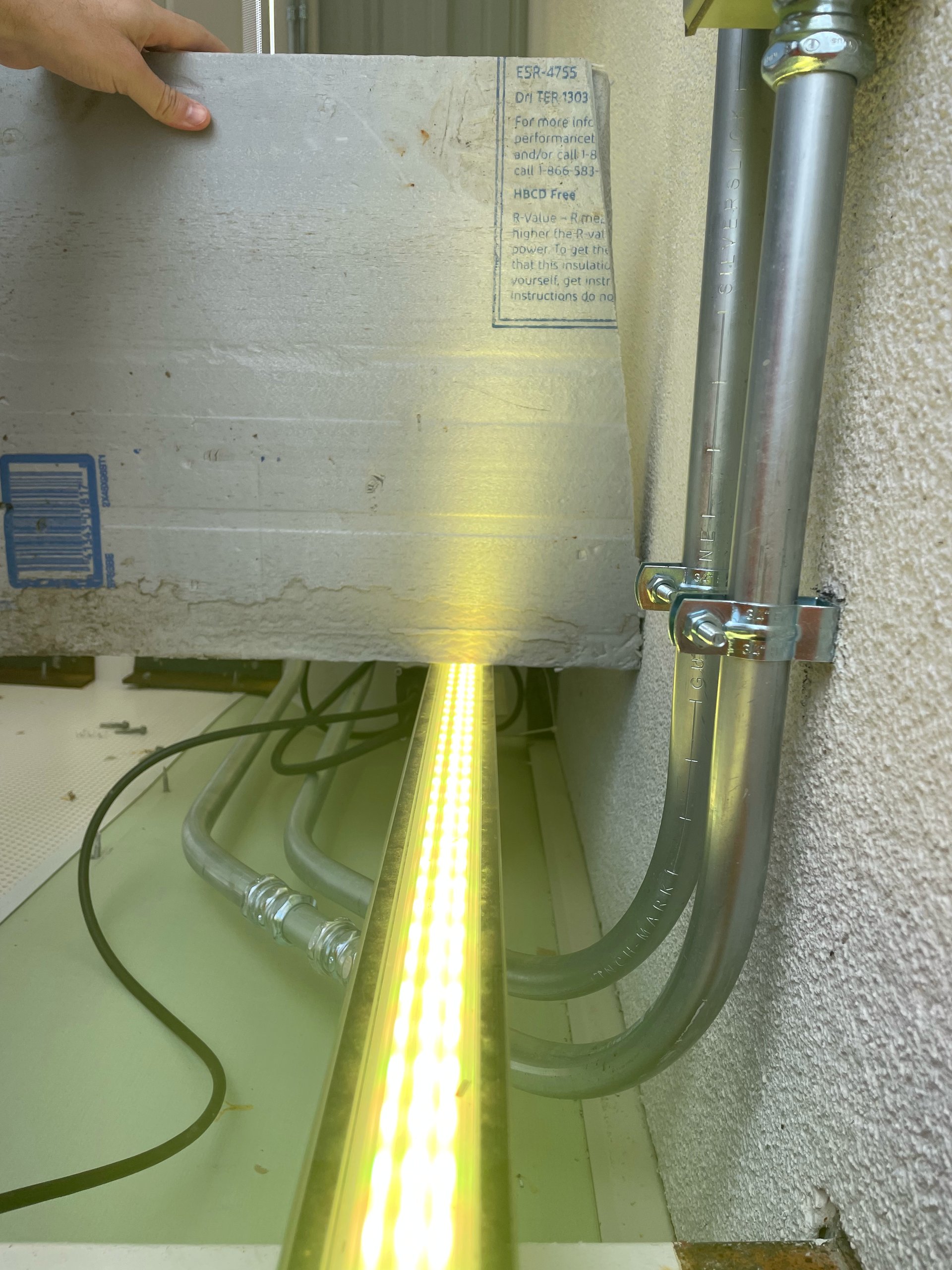
The lighting designers were able to test out the angle of the optics to help determine installation location.
Watch the video to see the color changing in action.
“We went back and forth for a while on design. Do we only have a bottom row? Do we only have a top row?” said Forbes. “We encouraged the client to keep both rows. And because we put them end to end, that helped diffuse all the light together and made it look more intentional.” Our engineering team programmed a linear scroll pattern in purple, pink, and yellow—Tulsa International Airport’s brand colors—slowly cycling through each color. The lighting adapts throughout the day, switching off after late-night arrivals and returning in the early morning, aligning with the rhythm of travel. There are other color schemes programmed for holidays, allowing the airport to engage with the community and reflect key moments throughout the year. The control panel was programmed with renderings of the façade, so the airport facilities team could easily visualize the scene they were selecting.
Projection with Precision
While developing the design concepts, ARUP was met with the challenge of how to illuminate the letters on the façade without the light spilling onto the rainscreen or beyond its borders. WE-EF’s FLC210 GOBO Projector resolved this perfectly. With the projectors, the lettering could be cut precisely with the GOBO frame, directing uniform light right up to the border of each letter. Our team provided on-site support, leading projection mapping, GOBO disc design, and aiming. Our team also worked with the electrician on the job to position and wire the projectors. “This was our first time working with GOBOS,” said Forbes. “It was a new concept for a lot of people, and it was definitely a success.” Set against the seamless color wash, the letters stand out crisp and bright, ensuring readability while preserving the beauty of the architectural lighting. At its core, the lighting concept reinforces the airport’s purpose: to connect people and places. By guiding arriving travelers, enhancing visibility, and creating a memorable first impression, light becomes part of the journey.
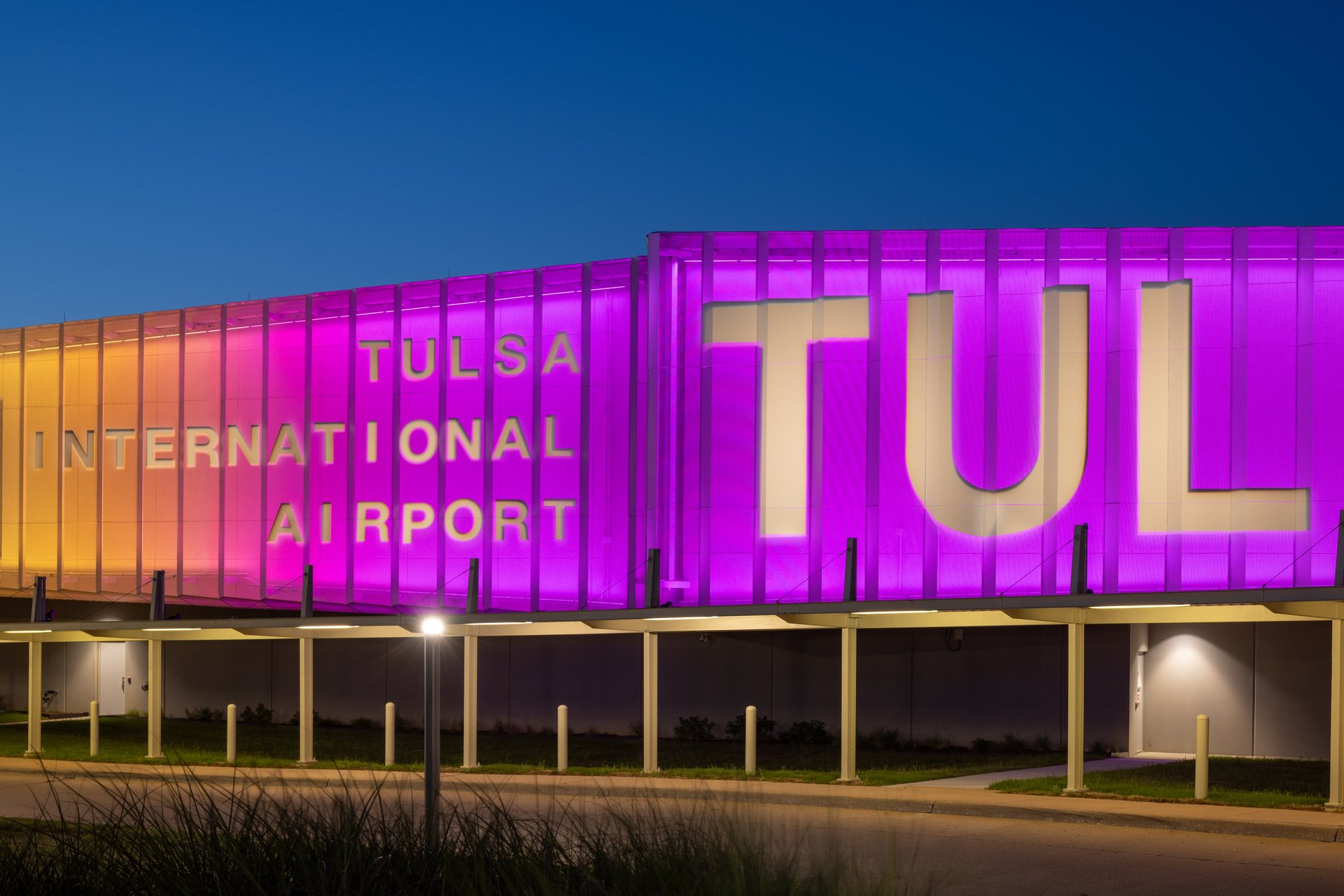
Architect: Narrate Design Lighting Designer: ARUP Client: Tulsa International Airport
Featured Products:
ETV140-CC LED RGBW COLOR CHANGER FLC210 LED GOBO PROJECTORLoading related products...